Why garage roofs are a common concern
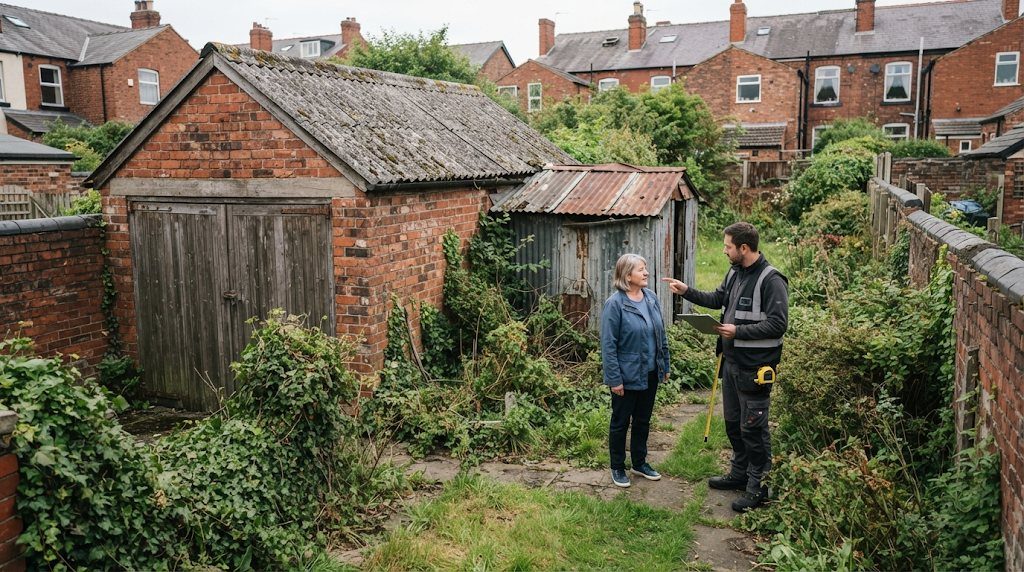
From the 1930s through the 1990s, corrugated asbestos cement sheets were a cheap and popular roofing and cladding material for domestic garages, sheds, lean-tos, farm buildings, lock-ups and commercial outbuildings. In good condition they release few fibres, because the fibres are bound into the cement. Over decades, weathering, moss and mechanical damage erode the surface and make them brittle, and breaking, drilling, scrubbing or pressure washing releases fibres.
The material can usually be recognised as grey corrugated sheeting, often with a weathered surface and sometimes a pattern of Big Six or similar profile, but it cannot be positively identified without a laboratory test. Some similar-looking sheets are not asbestos at all.
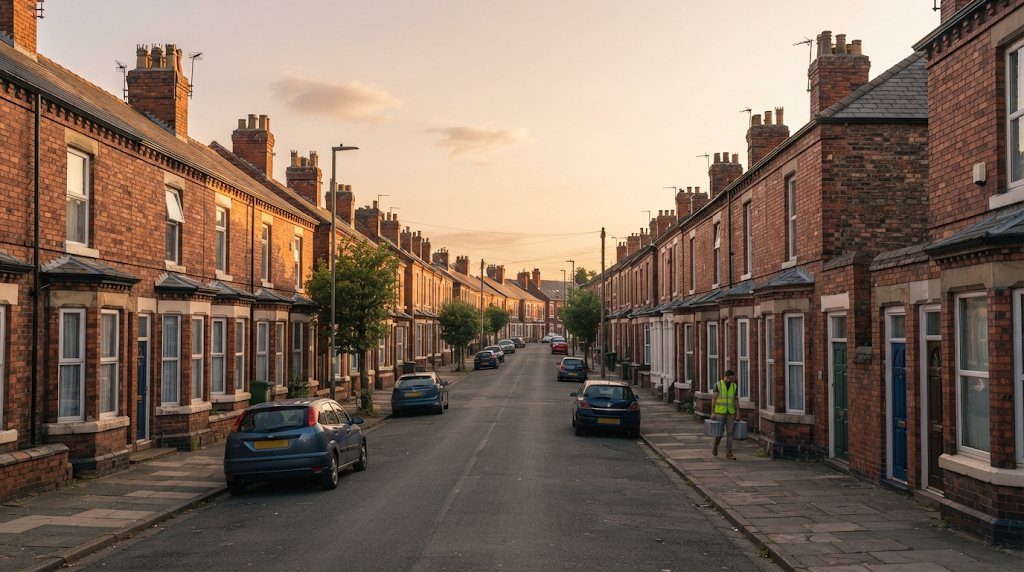
Cement garage and outbuilding roofs are common on 1930s to 1970s housing across Greater Manchester, particularly in Sale, Bolton, Bury and Wigan.
What not to do
Do not pressure wash, scrub or sand an old cement roof. Do not drill or cut the sheets. Do not break up old sheets to take to the tip. Do not walk on an old roof, which can be fragile and cause serious falls. Do not burn or bury waste. If sheets are broken, keep people and pets away, and take advice before cleaning up.
Council recycling centres in most areas will not accept asbestos waste without prior arrangement or at all, and the rules vary from one authority to the next. Hazardous waste must go to an authorised facility with proper packaging and transport, which is part of why removal is usually left to a contractor.
Testing and options
A surveyor can take a bulk sample, usually from a broken edge or an unobtrusive spot, and have it analysed. If the sheets contain asbestos, the options depend on condition and your plans. Sound sheets that will not be disturbed can often be left and monitored. Sheets that are deteriorating can sometimes be encapsulated with a suitable coating by a competent contractor. Sheets that are failing or in the way of building work may need removal.
Asbestos cement is classed as lower risk than some other materials, and removal of intact cement sheets is often possible without a licence, although the work is still regulated, requires trained workers and careful waste handling, and may need notifying. Always check with the contractor and take a quote.
Send us photos
Use the form to upload up to five clear photographs of the roof, close up and from a distance, and the age of the building if you know it. We will pass this to an independent partner surveyor, who will advise whether a sample visit is needed and what to expect. If removal is needed, we can connect you with licensed removal contractors for a quote.