Why a register is not a one-off
The duty to manage asbestos under the Control of Asbestos Regulations 2012 is a continuing duty. Once a survey has identified asbestos-containing materials, the duty holder must keep a record of where they are, monitor their condition and review the plan. Materials deteriorate, get knocked, get wet or get disturbed by maintenance, and a rating from three years ago may no longer be true.
HSE guidance on managing asbestos in premises says that the condition of known materials should be checked at suitable intervals. For many sites that means roughly once a year, with higher-risk materials checked more often and stable ones less often. The duty holder decides the interval based on the risk, and should be able to explain the reasoning.

Registers for city-centre offices and mills can be several years old by now. If yours is, a re-inspection is the quickest way to bring it up to date before the next lease event, sale or maintenance programme.
What a re-inspection involves
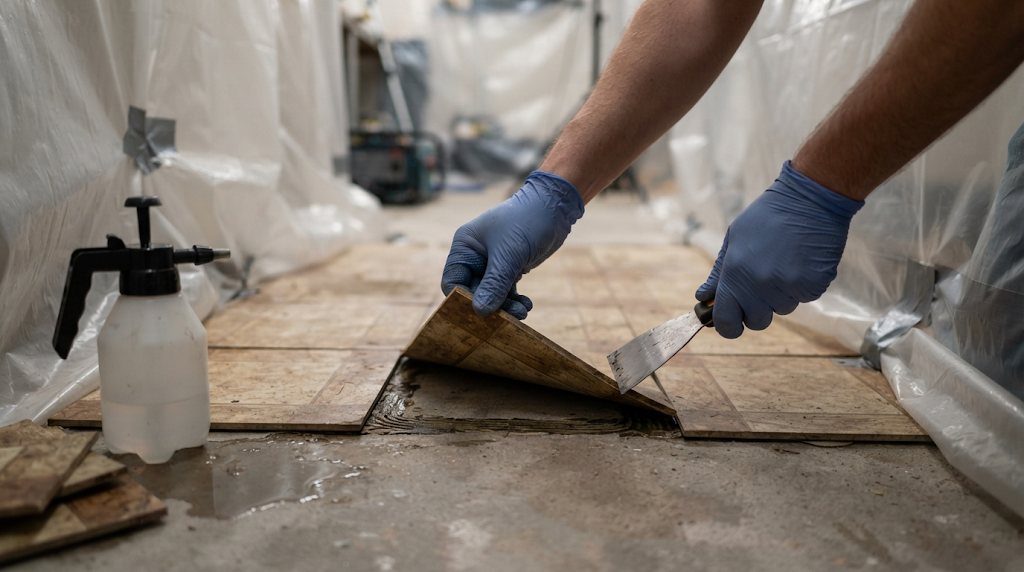
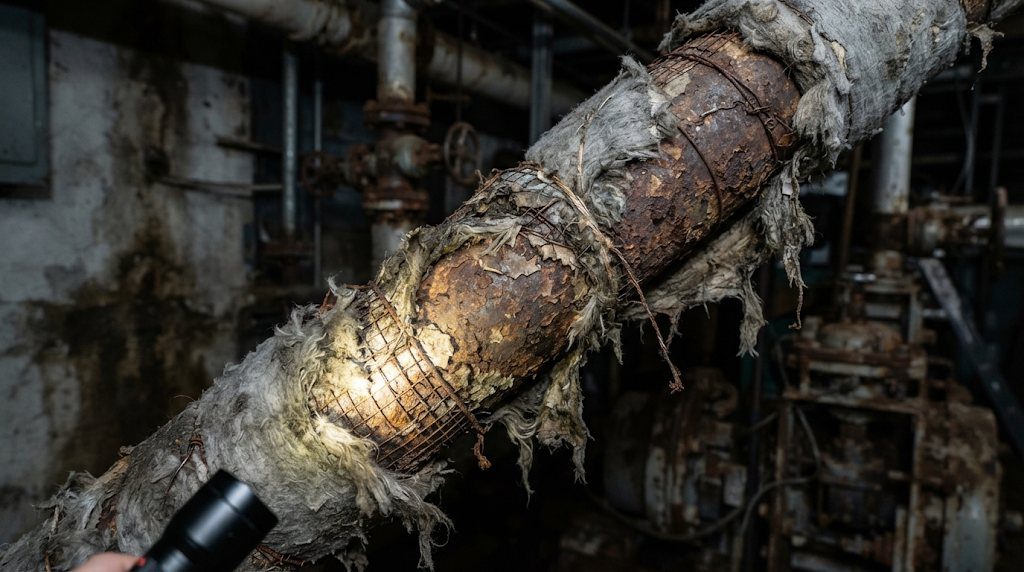
The surveyor takes your existing register and revisits every item on it. For each one they check that it is still there, still labelled, and still in the condition recorded. Changes are photographed and noted: a lagging jacket that has split, a ceiling board that has been drilled, a sealed panel that has been opened. The risk score is updated to match, and anything newly urgent is flagged to you immediately rather than waiting for the report.
A re-inspection is not a new survey. It checks the known materials, so it does not replace a refurbishment survey before building work, and it will not pick up materials that were never identified. If the surveyor notices a new suspect material during the visit, they will record it and recommend sampling.
Who needs one
Duty holders of offices, shops, schools, industrial units, warehouses and blocks of flats with an existing register should re-inspect on a schedule. Landlords and managing agents with a portfolio often book re-inspections on a rolling annual cycle so that no building falls out of date. If you inherited a register from a previous owner or managing agent and have no idea how old it is, a re-inspection is a sensible starting point.
What you receive
You receive an updated register showing the new condition and risk score for each item, a list of recommended actions, and a note of anything that could not be accessed. The dated record is useful evidence of good management if an insurer, lender, auditor or enforcing authority asks. If a material has deteriorated beyond what monitoring can handle, the next step is usually encapsulation or removal, and we can connect you with licensed contractors for a quote.